
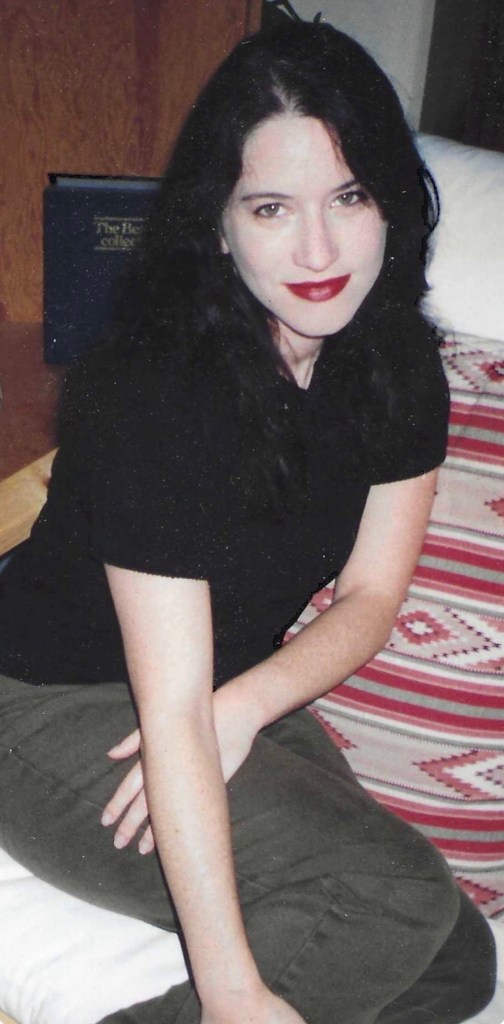
2025 will always be marked as a year of immense significance for me, having lost my wife and partner of 31 years, Rebecca Wyte, to cancer in April. Understandably, this has shaken me pretty profoundly, given that the time period I spent from being a 26-year-old dumbass to being a widower of 57 was defined and nurtured by my life with her. We had, in most senses of the term, a very good marriage that became even better over the years, and I know we were quite lucky in that respect.
My friend David gave me a book about grief and loss at Rebecca’s memorial service that he said had served him well when his mom passed away. In it, there was a bit about recognizing and embracing that you, the survivor, are now different than you’d been before, and that this might be a chance for some reinvention. “Maybe we can start from our shatteredness and build something new from the shards. Maybe this is an opportunity to be who we might have been”.
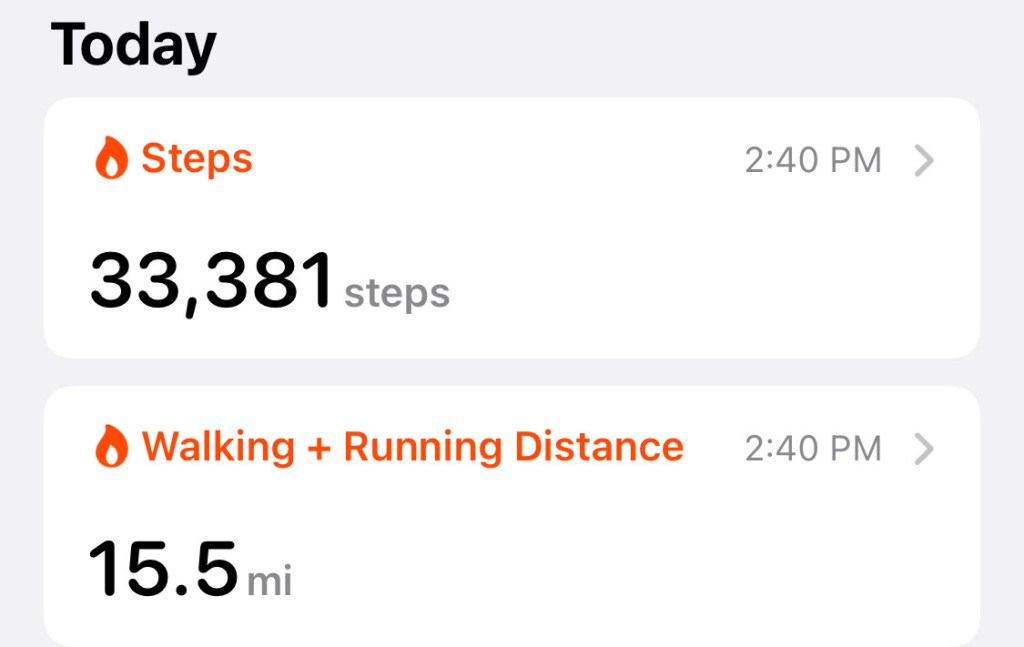
I kind of liked that as an organizing principal for how best to proceed in the months following her death. It likely had a role to play in my rejection of the modern technology-driven rot economy; in my “idiot’s quest” to walk every block of my city (which is going great, actually!); and in my prioritization of reading books – physical, paper books – over film, TV, live music, and especially over internet pursuits. My feeling was, and remains: as long as I’m staying social and active with other humans (which I am), and I’m not turning into a sad, lonely bookworm hermit – well then, stuffing my mind with great reading is potentially the best and most rewarding use of my time, along with family interaction (especially with my son); travel, exercise, and the Winnipeg Jets hockey team.
So I read 64 books in 2025, which I guess is a personal “record”. Hooray, wow! Funny enough, this was the year that I saw an inordinate amount of preening on the Substacks that I follow about books & bookishness: reading the great books, literacy, oh my god look at me, I read a lot, why doesn’t everyone read as hard as I do. So I just want to say I’m not that guy. But I sure do love a list! To wit, here’s what I read in 2025, and then we’re going to get into the Top Ten that I recommend, and why.
Books Read in 2025, in the order in which I read them
– Dorothy B Hughes – The So Blue Marble (1940)
– Tony Tulathimutte – Rejection (2024)
– Philip Roth – Sabbath’s Theater (1995)
– Justin Wyatt – Three Women (2024)
– Philip Roth – Nemesis (2010)
– Michel Houellebecq – Whatever (1994)
– Nicolas Carr – Superbloom: How Technologies of Connection Tear Us Apart (2025)
– Solvej Balle – On The Calculation of Volume 1 (2024)
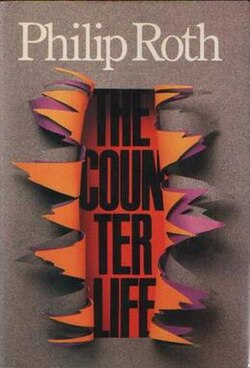
– Philip Roth – The Counterlife (1986)
– David Leonhardt – Ours Was The Shining Future: The Story of the American Dream (2023)
– Kingsley Amis – Ending Up (1974)
– Denis Johnson – Angels (1983)
– F. Scott Fitzgerald – The Great Gatsby (1925)
– Barbara Ramos – A Fearless Eye: The Photography of Barbara Ramos: San Francisco and California, 1969–1973 (2025)
– Julian Barnes – The Sense of an Ending (2011)
– Bob Johnson – The Continental Divide: Stories (2025)
– Kent Haruf – Plainsong (1999)
– Philip Roth– When She Was Good (1967)
– Emma Pattee – Tilt (2025)
– Richard Neely – Shattered (1969)
– Philip Roth– The Prague Orgy (1985)
– Billups Allen– I Exhibited Films For A Year. I Lost Money, but I Think I Made My Point (2025)
– Michael Deagler– Early Sobrieties (2024)
– James M. Cain – Mildred Pierce (1941)
– Philip Roth – The Breast (1972)
– Bruce Pavitt – Sub Pop USA: The Subterranean Pop Music Anthology, 1980–1988 (2014)
– Philip Roth – The Anatomy Lesson (1983)
– John Fante – Dreams From Bunker Hill (1982)
– Fiona Mozley – Hot Stew (2021)
– Lisa Tuttle – My Death (2004)
– Brian Shanley – Dodged & Burned: Seminal Rock Photography 1976-1984 (2025)
–Jeff & Steve McDonald – Now You’re One of Us: The Incredible Story of Redd Kross (2024)
– Philip Roth – Operation Shylock (1993)
– Tom Brinkmann – Bad Mags: The Strangest, Sleaziest, and Most Unusual Periodicals Ever Published! (2008)
– Steve Miller – Laughing Hyenas (2025)
– Scott Spires – Social Distancing: A Novel (2025)
– Meghan Daum – Catastrophe Hour: Selected Essays (2025)
– Leonardo Sciascia– To Each His Own (1966)
– Chelsea Bieker – Heartbroke (2022)
– Harold Pinter – The Birthday Party (1958)
–Christine Rosen – The Extinction of Experience: Being Human in a Disembodied World (2024)
– Michelle Huneven – Bug Hollow (2025)
– Eric Crane – Faster Than The Speed of Sound: Vignettes from the Bay Area Thrash Metal Scene (2025)
– Philip Roth – Patrimony (1991)
– Vijay Khurana – The Passenger Seat (2025)
– Sahan Jayasuriya – Don’t Say Please: The Oral History of Die Kreuzen (2025)
– Darrell Kinsey – Natch (2025)
– Joseph Mitchell –Old Mr. Flood (1948)
– Josh Rosenthal, ed. – Treasures Untold: A Modern 78rpm Reader (2025)
– Emily Adrian – Seduction Theory (2025)
– Philip Roth – Exit Ghost (2007)
– Gwendoline Riley – First Love (2017)
– David Polonoff – Wannabeat: Hanging out … and hanging on … in Baby Beat San Francisco (2024)
– David Goodis – The Burglar (1953)
– Grégoire Bouillier – The Mystery Guest (2006)
– Philip Roth – Deception (1990)
– Flannery O’Connor – A Good Man Is Hard to Find and Other Stories (1953)
– Robert Crumb – Tales of Paranoia (2025)
– Genny Schorr – All Roads Lead To Punk (2025)
– Steven J. Zipperstein – Philip Roth: Stung By Life (2025)
– Ford Madox Ford – The Good Solider (1915)
– Pat Blashill – Someday All the Adults Will Die!: The Birth of Texas Punk (2025)
– Graham Greene – The Third Man/The Fallen Idol (1949)
– Fredrik DeBoer – The Mind Reels (2025)
Well. One thing comes to mind now that I have typed this out: there probably needs to be a “Philip Roth category”, and then a category for everything else. This was my year to try and complete the Roth canon, which I failed on. I read ten of his novels, which leaves me with five more of his books to read in 2026. He has become, let it be said, my all-time favorite novelist, and when I’m done with his 30 books, I’ll probably read 15-20 of them again before I leave this realm. So let’s break this into two.
In the “Best Books By Philip Roth That I Read in 2025” category, I award #1 to The Counterlife from 1986. A strange, surreal, satirical novel of Jewishness, family, Israel and self-absorption, told playfully from multiple perspectives and with some highly unreliable narration. It’s considered one of his classics because it is, indeed, a classic – and perhaps only bested in my eyes by The Ghost Writer and American Pastoral.
I’ll give a very close #2 to 1967’s When She Was Good, which not everyone loves, as it’s a true outlier in his catalog: a female protagonist, no Jews, and a sword of righteousness thrust at the reader in judgment, until our protagonist falls on her own sword. So, so good, and absolutely riveting. The only one of the ten I read I wasn’t wild about was Nemesis, his final novel from 2010, which, despite some interesting themes to chew on, is so much more light and airy than his denser work. It really reads like a book from a guy in his eighties who’s ready to close up shop – which is exactly what it was.
Top 10 Books I Read in 2025, non-Philip Roth Category
- Flannery O’Connor – A Good Man is Hard To Find and Other Stories
- Gwendoline Riley – First Love
- Bob Johnson – The Continental Divide: Stories
- Kent Haruf – Plainsong
- Emily Adrian – Seduction Theory
- Graham Greene – The Third Man and The Fallen Idol
- Chelsea Bieker – Heartbroke
- Nicolas Carr – Superbloom: How Technologies of Connection Pull Us Apart
- Scott Spires– Social Distancing: A Novel
- Michael Deagler – Early Sobrieties
Rather than praise the giants (Flannery O’Connor, Graham Greene), I want to focus on the five novels or story collections in here that either came out this year or within the past few years (post-pandemic), i.e. Chelsea Bieker‘s excellent Heartbroke from 2022. Bob Johnson’s The Continental Divide: Stories packed a real wallop, with a collection of tales of losers, left-behinds and the disgraced in a small Indiana town. Minus the gothic violence and the flights of rapture, it’s nearly as knockout a collection as the O’Connor book I read, with some of the same unnerving themes.
Emily Adrian‘s adultery tale Seduction Theory totally beguiled me, and at the end I was couldn’t believe how much I’d enjoyed a book about academics and their infidelities. Incredibly well-written, pulse-rushing and true to life. Scott Spires‘ excellent Social Distancing focuses on a father and adult son living together in Wisconsin and key themes of alienation, social fear and piney yet floral IPAs. It’s full of very recognizable human foibles and is also really, really funny. And a great companion book to that one is Early Sobrieties by Michael Deagler, centered on a 26-year-old recovering alcoholic, adrift and couch-surfing across a gentrifying Philadelphia.
If you’re looking to escape the rot economy yourself, you may be spurred into action by Nicolas Carr‘s Superbloom: How Technologies of Connection Pull Us Apart. I think it’s what tipped me over into deleting all of my social media accounts, one of the finest big-boy decisions I’ve ever made and something I don’t regret in the least.
Next year? Well, I’m going to finish those last 5 Roth books, and I’m going to read at least 3 books from the 1800s, including Anna Karenina, something I’ve long been wanting to tackle. I can also feel a major Graham Greene bender coming on – there are still at least ten of his novels I’ve never picked up. I also want to stay connected to new fiction, especially small-press fiction, as it’s clear that there are some real gems being published every year like the Spires, Deagler and Johnson books that I’d have been pretty bummed to have missed out on.














 The Word Goes Flesh