Validate From Within

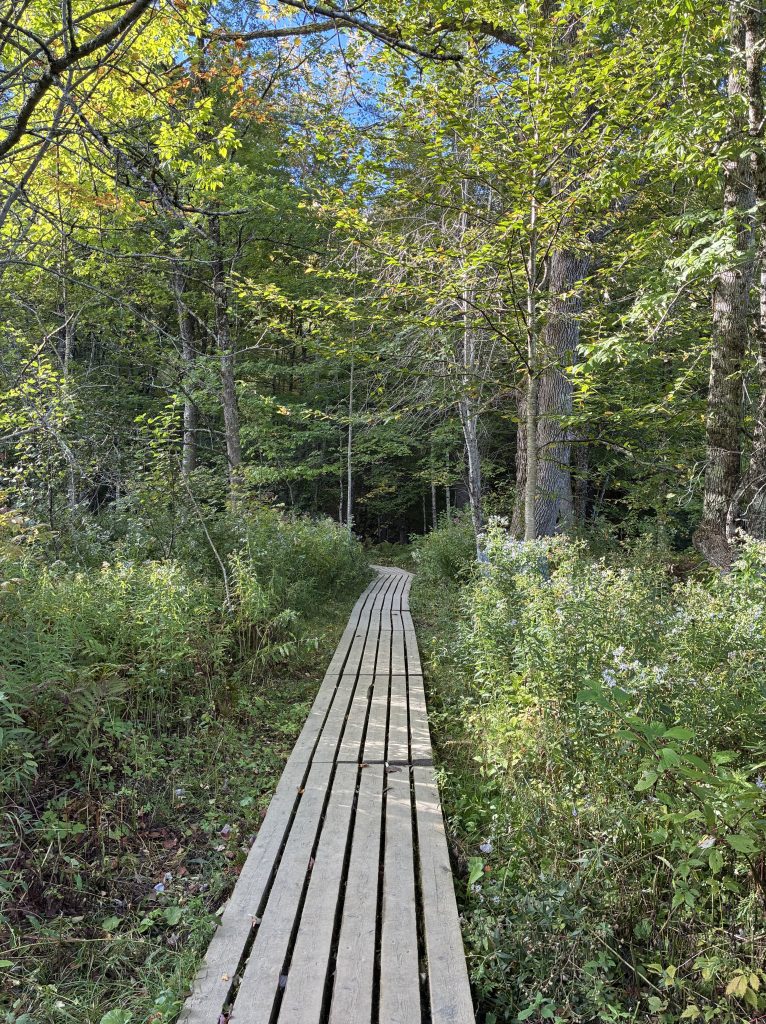
I wrote this piece this morning at a rustic hotel in Stowe, Vermont, much like Thoreau at Walden Pond.

In the nearly eighteen months since my wife Rebecca passed away, I’ve become an unusually contemplative person, given to much inward thought about who I really am and what I want to do with the thirty-ish years I might have left. I wouldn’t call it grieving as such; the grieving never really went away, yet this is more of a reaction to new realities that involve navigation of mostly uncharted waters. In coupledom, there’s always someone to help set your compass for you and with you, as well as a set of ongoing circumstances that pretty much dictate what you’re going to do on a daily basis anyway: raise a kid, vacation together, choose shows to stream, meet friends, fantasize about what retirement might look like. Alone, there’s an opportunity that’s been given to me to reset what all of that looks like, and I suppose that, even if I didn’t want it, I’m forcefully grabbing it anyway.

The title of this piece is a mantra I’ve often said to myself on occasion. Maybe not often enough. I’ve been pretty atrocious at actually living it. Around 2000 or 2001 we were camping near Santa Cruz with some friends, and I hopped up onto a tall tree stump, lording over everyone and generally just showing off for no reason. Our friend Doreen calmly rolled her eyes and said “Jay, validate from within”. Rebecca laughed, I laughed, and from then on it then became something Rebecca jokingly said to me, and I sometimes said to myself when I was doing something far too obvious, likely just to get a reaction from others.

Alas, I kind of think that a huge portion of my life has been lived at a complete opposite from said mantra. Without really thinking about it, I have been seeking external validation from others since at least my college days in the 1980s. I have created blathering, show-offy public podcasts, blogs, radio shows and fanzines; written learned, braggy lists of my “favorite” this-and-that; and, of course, written articles just like this one or others like it not in a personal, inward-facing journal, but rather in a public forum where it might happen to gather reaction, attention and validation. In that respect, the internet and especially self-publishing’s arrival were godsends for those yearning to be heard, and therefore potentially validated. People like me, perhaps.

Now, there’s no reason necessarily to give this much thought, and most don’t, yet I’ve always seen the narcissism that’s so endemic to online behavior as really just another name for insecurity. I had a close relative perceived as narcissistic by some, but she really wasn’t. She was instead tremendously insecure and unsure of herself and where she fit in. I think my own preening and posturing online and my obsessive need to share my great musical taste with others sprung from a similar place, and quite possibly from genetics as well. I wasn’t a popular kid in junior high or high school, nor was I particularly disliked. I was just…..there. I suffered the same indignities that so many pubescent pre-teens and teens did, of course, but nothing more extreme than the usual immense, crushing concerns about my looks, of not being an outcast, of not being able to talk to girls, and so on.

What I was, though, was an absolute music obsessive, and I was extremely curious about hearing and mentally cataloguing music that was outside of the norm. Because this period was the early 1980s, and because I grew up in an urban area with numerous college radio stations and record stores, I self-educated myself to the point of absurdity on the dizzying and exciting world of punk, post-punk and new wave that was spinning around me. Sometimes, making lists and booking pretend 5-band bills in my room, it was literally all I thought about. By 1982 or 1983, it was clear that my musical taste and underground music knowledge was far more “advanced” than that of my metalhead and Top 40 peers. That was effectively the sum of my talents, aside from being a decent writer. I was too introverted and confused to do much of anything with it, so I instead studied further, listened deeper, and plotted for ways to receive external validation for the one thing I was better at than anyone I knew, such as it was.

And frankly, that’s almost certainly the true story of how I came to still be pumping out punk/underground music podcasts as recently as this year, 2026, at the ripe old age of 58, and writing snarky reviews of underground music fanzines that were written decades ago by people in their 20s; that I in fact bought when I was in my teens and twenties. And why? Because people fucking liked it, and because they told me so. Every time I lacked the ambition to do another episode, or post, I’d get some dopamine zap of external validation, or a cumulative batch of it, and I’d “un-retire” something I’d tried to walk away from. There’s really nothing like being admired for something you’re purportedly good at, even when it’s as low-stakes as all the musical malarky I’ve spent forty years championing and documenting. 

Surely there’s nothing wrong with writing or creating something and having even a small audience that enjoys it? Well, no. It’s when it tips over into performative, ego-stroking obligation that I object to, at least for myself. That seems to be the way the game is played now, even if we’d prefer otherwise. My music fanzine Radio Dies Screaming #1 was by far the worst seller of the twelve fanzines I published over a twelve-year period, and why? Because I’d quit social media and therefore couldn’t, or wouldn’t, relentlessly flog it there. Look at me look at me I’m a writer buy me buy me buy me. I just can’t. I’m strangely proud of the 200 or so copies that I therefore have sitting on a shelf in the garage.

Of course, many folks just keep on keepin’ on. I certainly did so for all this time, and I haven’t lost much if any enthusiasm for the music, either. My record collection isn’t getting any smaller. But the last eighteen months have sharpened my sense of self pretty significantly. Were it that it were not so, but I now see mortality in a way I never quite did before. I see the gathering of experiences, the expansion of wisdom, the discipline of maintaining health, of engaging directly and forthrightly with my fellow man (and other such platitudes) as being central to the time I have left. Not chasing dopamine hits on the internet.

Lord knows I have many thoughts, often negative, about the state of humanity at a macro level today. At a person-to-person level, I think people are usually just fine and are often far better than that. I loathe what the smartphone has done to attention spans, American politics, egotism, distraction, and to people in crosswalks and other public spaces. I believe AI, if accepted into one’s personal life, is an absolute brain-eraser, and to the extent I can avoid it entirely, I do. Many lesser evils – crypto, gambling, the profit-maximizing degradation of professional and college sports, short-form video, tattoos, terminally online “socialists”, men who ride electric scooters, people who call breakfast “brekkie” and sandwiches “sandos” – still drive me batshit crazy. I even deleted the Substack app from my iPad because it defaults when it’s opened to a social media-like stream, where even smart writers whom I otherwise respect feel that they need to preen, bluster and compete for attention in that awful irony-drenched social media-speak that is killing us all, very slowly.

I have spent so much of the last year and a half instead retreating into reading, into exceptionally long solo walks without headphones, and into travels to anywhere new and pastoral that it’s sort of forced a reckoning with the person I was and the person I might yet become. Sigh.

“Validating from within” seems like a great mantra to pick up again. I’m somewhere between seven and twenty-five months away from retiring from work for good – no part-time or “consulting” BS for me if I can avoid it – and a recent reckoning that I can do so without switching to cat food for sustenance has been pretty much the biggest dopamine hit I’ve ever had. I have a ridiculous amount of hobbies and interests, and not only the books/music/film I’ve built my life upon. I’ve ended the posturing blogs and podcasts and fanzines. I’m proud of them, sure, and I’m not sure what I would have otherwise done with all the time I spent creating them over the years, aside from having been an even better husband and father. 

I can even see writing a book or two, and I do have a few ideas, but I’m pretty sure I wouldn’t be doing it for external validation but more the act of writing and editing and revising, even likely publishing it on my own just to have some copies to give to friends and family and whatnot. Anything I write here, to my Word Goes Flesh audience of tens of people, will likely be undertaken in the same spirit of “the journey is the destination”. If I’ve gauged my evolving psyche correctly, that’ll be more than enough mental sustenance, even in the complete absence of any likes, stars, “favorites” or comments.

Navigating Normalcy and Baseball Mania in a Global Pandemic

(I wrote this piece in December 2020, then forgot about it. At one point, pre-vaccines and in the depths of the pandemic, I had planned on taking a page from the book of Zisk and publishing an irreverent fanzine about baseball. It never happened. Today, I realized I’d completed this piece, and reckoned it shouldn’t just sit in Google Docs & should instead serve as the proverbial time capsule. Perhaps you too had these spikes of mania during 2020, and can relate in some manner.)

I’ve found as I’ve grown older that my baseball obsessions, and my desire to follow the sport closely, actually ramp up in the offseason, as opposed to, you know, when the games themselves are actually happening. The absence of a maelstrom of 10-15 games to track every single day, along with the lack of quantitative confusion that rapidly-accumulating baseball statistics bring, probably provides me with the mental space and calm to actually process all the things about the game that I enjoy so much. When the only thing going on is “the hot stove”, I’ve found, is the period in which I tend to read about, watch and contemplate the world of baseball the most.

The 2020 Covid-19 pandemic, therefore, predictably brought my lifelong baseball obsession to a raging, full-on boil – far more than I’d expected it to. It was my implicit reaction to something confounding and potentially deadly. Despite my better intentions, this baseball mania instantly displaced some of my more lofty, I-need-to-do-more-of-that passions, like watching arty films and reading more fiction – all of the aspirational, extracurricular things one might say they were going to do if presented with an unplanned stint at home. It probably had some connection to being teased to the very start point of the 2020 MLB season, through several weeks of pitchers & catchers, Spring Training games on the radio and so on – and then having it all cruelly yanked away by the fickle finger of fate, and by a deadly, once-in-a-hundred-years virus, sloppily and indifferently wished away and then bungled by the US federal government. More likely, it was an innate reversion on my part to something simple and uncomplicated; to a sport that has been a huge part of my life as long as I’ve been sentient enough to comprehend it, and that offers some level of comfort and normalcy even in the best of times.

The early pandemic, which of course rages on as I type this, begat a ramping-up of a number of strange baseball-related behaviors I’d only dabbled in over the years. I instantly switched out our cable TV subscription to ensure that we’d get the MLB Network – confusingly, at a time when no baseball at all was being broadcast. No matter. I hooked myself onto a series of documentary specials the network had built up over the years called “Baseball’s Seasons”, in which I’d revisit the pennant races of 1971, or 1965, or 1984, or 1997, and so on. In every hour, a champion. The thrill of victory and the agony of defeat. A circular narrative, unchanged every year, in which the rhythms of baseball produced a set of playoff teams, a World Series champion, two MVPs, two Cy Young Award winners, and two Rookies of the Year. Brainless comfort food in a world gone mad, or something like that.

MLB Network’s documentaries are the best thing about it, as far as I’m concerned. Their “MLB Network Presents” specials may tend toward the maudlin at times, but I truly watched some real corkers during lockdown, such as “The Cobra at Twilight” (Dave Parker, the 1979 “We Are Family” Pirates, and the man’s subsequent battle with Parkinson’s) and “Joy in Wrigleyville” (what it was like to be a lifelong Cubs fan when they won the 2016 Series). In April, I was laid off from my tech job, along with over 20% of the entire staff, as part of a relatively unnecessary Covid-19 panic by my company – and yes, of course that’s what I’d say. These two MLB Network shows were necessary salves at the end of long days spent massaging my resume, firing off emails, and waiting on hold to talk to California’s unemployment helpline.

In March, when lockdown truly was lockdown (our Mayor proclaimed for a few weeks that we couldn’t travel beyond a 5-mile radius of our homes), I rapidly added to a moderately-sized baseball card collection and was truly 11 years old again – a transparent return-to-the-womb coping mechanism if ever there was one. You can read about that process elsewhere in the magazine. Then, fearing that some of the more independent yet vital baseball-adjacent media organizations might be struggling to stay alive, I joined Fangraphs on a premium membership; plunked down for Society for American Baseball Research membership; and quickly hoovered up every back issue of Zisk fanzine that I didn’t already own. That last move was likely the linchpin to starting my own baseball-themed print fanzine, so who’s to say the pandemic didn’t have a few positive knock-on effects, right?

At one point, I not only had those many documentaries to watch at night, I would routinely alternate or complement them with some of the better recent baseball books, some of which are reviewed in these pages, rather than with the more highbrow fiction or nonfiction I’d intended to read. I belatedly discovered the books of Jason Turbow, then rapidly devoured them all. They made for excellent diversions as I hunted for work and read daily about the callous stupidity and grift coming from Washington, and the confounding sickness that waxed, waned and waxed again all over the world.

Then there was the great KBO enthusiasm bubble. I don’t know if you personally took part in this pandemic-induced tulipmania, yet when ESPN negotiated their 11th-hour contract to broadcast a season’s worth of Korean Baseball Organization’s games in May, I leapt right in and watched a few days’ worth of Tivo’ed games between teams with strange names like the NC Dinos and the Doosan Bears. It was part and parcel of missing the game, sure, but I also think there were many of us who revelled in an abstract schadenfreude. See, United States of Dumbasses, this is what you get when you take care of your citizenry and listen to scientists. You get live baseball, albeit without fans in the stands, and minus those Korean dance troupes that perform synchronized cheerleading moves. Baseball nonetheless!

My KBO fandom certainly didn’t last long, a casualty less of its uneven play and ballplayers whom I’d not heard of than of games that were already nearly a day old before I had the time or wherewithal to watch them. It was quite something to see when I did, however; especially watching Karl Ravetch and Eduardo Perez up late at night, trying to call games that were happening in another part of the world over Zoom, with them also each being in separate locales. Smooth and professional it was not, yet it was also the sort of dissociative spectacle I felt we all deserved at that point.

On that: as MLB season-resumption talks sputtered, then gathered steam, then sputtered again, there was a sense that I shared with more than a few armchair pundits that “we probably don’t deserve a baseball season”. I believe the popular phrase was, “Professional sports are the reward we get for having a functional society”. Well, we don’t have the latter even as I write this, despite the results of the 2020 presidential election, but we got the former many, many months ago anyway. I feigned total indifference when the MLB first returned, but I know I was pretty stoked to have it back, and I began watching Giants games when and where I could.

The 2020 season itself, as you know, was over and done with in a blur. I sat in my car listening to the radio in front of CVS on the last day of the regular season, as the Giants squandered their longshot chance to sneak into the expanded playoffs. In those two months they’d been better than they had any right to be, and none of it meant much of anything, given the small sample size. As it was happening, in August and September, I reverted to my aforementioned disengagement with the sport of baseball – “disengagement” relative to where I’d been in the previous months, not relative to the average human being. In other words, I worked in other pursuits. I got a new job. I stopped watching all those documentaries. I treated baseball as I do in any other season – as something to read about in the paper every morning, and which I’ll occasionally watch in full on TV or listen to on the radio. 

Then came the World Series, and I had to chide myself for not being all-in, given the fact that this was probably the single best Dodgers team since the mid-1970s, and an exciting Rays team built by mad scientists and quantum physicists with spare parts, duct tape and baling wire. I therefore decided to make the effort to watch every game, and indeed, I’m quite glad I did. As I settled in to watch Game 1 of a World Series featuring California and Florida teams playing the entire series in Texas, I had a profound sense of delight to actually see and hear fans in the stands – something I hadn’t even known was going to happen until I tuned in. They looked appropriately distanced, they were having loads of fun, and best of all, I heard their (real) cheers when someone popped a dinger or was struck out by one of the Rays and Dodgers’ interchangeable flamethrowers. It all felt very normal. It felt, at best, like it might be portending the end of this nightmare. To this day, I’ve yet to read any “I got Covid at Globe Life Field” stories, and believe me, I don’t want to read them.

Now it’s December 2020 as I write, and it’s clear that my pandemic baseball mania has lessened to such an extent that I’ve returned to a quite quote-unquote normal level of fandom. Keep in mind that all appearances to the contrary, I did not entirely ignore my family, nor my job search, not household improvements, nor some of my other passionately-engaged frivolous endeavors during this period. As I write this, I’m still happily married, my teenage son remains sane, I’m gainfully employed and we’ve even made a few minor updates to the home. I published a music fanzine (Dynamite Hemorrhage #8), created twice-monthly music podcasts and somehow found the time to go running 3x/week. Here I am writing this baseball fanzine, too. So totally, totally normal.