

My wife Rebecca died this year. Just over four months ago, to be exact. She and I had been together for more than half our respective lives, having started a whirlwind courtship in 1994 that moved very rapidly into coupledom, then into living together and then marriage four years later. While her death was something that I ultimately saw coming, given the severe regression of her health the previous couple of years, it’s those final months that I spend the most time ruminating over, and in particular, the final two months, from February to April 2025. These were months spent trying to pull her back from the abyss; in trying to convince ourselves that it was possible; and in grasping in futility any evidence that supported positivity of any kind.
Of course I think about the rest of our 31 years together all the time, most of which Rebecca spent healthy and strong. We created a now-22-years-old son whom we love and loved; we traveled everywhere; and she worked a variety of careers during that time, including as a social worker, an after-school science teacher and as a bending, twisting, long-posing yoga instructor for both adults and children.
Yet my brain can’t seem to let go of her end, those last two months.
I think about these months and I feel them so viscerally. They are intense, and they pull up emotional turbulence from me that ranges from congratulatory, back-patting self-satisfaction (for having been a great caretaker and for having been verbally acknowledged as such over and over by my dying wife) to regret (for not having been even more devoted to her in her final days) to guilt.
For some reason, I have this intense need to catalog these months, to put them accurately on the record, and to attempt to not forget a single detail. I think it’s because the rest of our life together was often lived publicly, and in concert with others – in the sense that the many happy parts were shared widely, and were documented in photographs, social media posts and verbally, in places well beyond the confines of our home. Her final two months were not shared, except with me.
It all started when Rebecca had a tumor removed from her chest way back in 2002 to help combat an autoimmune disease she’d been suffering from called myasthenia gravis. Ultimately, this extraction was successful, and she went into full remission within a year of giving birth to our son in 2003. For ten years, we never discussed this removed tumor as “cancerous”, either with her doctors or between the two of us, and yet that’s exactly what it was. Its remnants showed up on a scan in 2012, leading to two surgeries and an intense round of chemotherapy. Hair loss, sickness, the whole deal – and yet by 2014, and for the following eight years, the marginally remaining cancer was just a slowly-ticking phantom that showed up on scans but barely budged each year.
It certainly didn’t affect her daily vigor. On the contrary, she worked out and lifted weights, she raised our son, she aggressively pursued new hobbies, made new friends, and far more. It was what you’d call a normal life, albeit one that lived with a dangerous, hard-to-track specter. All of a sudden, it began sending haywire and hard-to-decipher signals across her organs and systems in 2022.
Rather than spreading and multiplying as cancers typically do, Rebecca’s instead wreaked havoc during her final three years on her lungs, her digestive system, her blood and, of course, her ability to live life to the fullest the way she had been. Doctors, especially at first, treated each issue individually and not systemically, something that impressed upon me repeatedly just how little we often still know about disease and illness in 2025, despite everyone’s best intentions and extensive training.

Coming right after Covid, we had to be extremely careful to make sure that she, an immunocompromised adult, didn’t get it. Ironically, when she did, her symptoms ended up being no worse than anyone else’s. She kept up regularly with friends and showed immense love and care for both myself and our son, and only really slowed down significantly in 2024 after a January hospitalization, and then particularly in 2025, tipping over into those final two months that we didn’t know were the final two months.
I have extensively documented for myself, and very deliberately for no one else, how we managed during the time between when she was released from a two-week stint at UCSF Hospital in late February 2025 to her death in April. I was very much on duty during this time, working full-time from home for my work – which is a remote job anyway – while also serving as Rebecca’s cook, her driver to appointments, her daily outdoor walking and then wheelchair-pushing partner; her administrator of increasingly complex daily medicines, including intravenously; and of course her husband and best friend. Even in her final seven days – when I’d finally admitted that she might not make it through the end of the year – there were tests and readings and hopeful signs that we held up together as evidence that she could improve, that she might rebound.
I regret, with the benefit of sad hindsight that fills my eyes with tears every time I think about it, that I didn’t drop everything at all times to just be with her. This regret bleeds over into guilt. This guilt can be intense in brief moments, and it takes many forms. Most often it is thankfully quickly leavened by the rational knowledge that any behavior I might feel guilty for was normal and explainable behavior in the moment. For instance, I too often brought up that I needed eventually to go to Oregon to help my 81-year-old father, who’d recently suffered a stroke. We talked about ways that this could happen, knowing that it really couldn’t. Same with a business trip to Chicago, where my company is located, for “face time” that I hadn’t been able to have for the previous 14 months, and got nervous about due to having been laid off from previous jobs. I even hoomphed a couple times about the timing of her daily walk if it didn’t line up with other ridiculous priorities of my own, such as getting my own exercise, or some inane work meeting I almost definitely could have easily rescheduled.
There’s also the guilt that comes from knowing, after the fact, that she would die from an inability to breathe, and for not concentrating anything and everything on fighting just that part of her illness alone. Alas, she was fighting a multi-front battle. I do wonder if delaying her death would have also meant deepening her suffering. I always said to her how I would do anything to keep her from suffering and from pain. All things considered and relatively speaking, both suffering and pain were minimal, and I know that my care had a lot to do with this. Although that’s all very easy for me to say on both counts.
What would my coping and grieving process be like under different death-of-spouse circumstances, I wonder sometimes? How does the abrupt, accidental death of a healthy spouse, a woman in the prime of life, hit for the surviving spouse in the months and years following? There are certainly plenty of people to ask. I suspect – and I think quite rightly – that it’s far worse than what I’ve gone through. In the grand scheme of things, it would have been far worse for Rebecca as well.
What about a long, slow, eminently foreseeable decline? The “you’ve got five years to live” diagnosis. The “you’ve got cancer, and there’s nothing we can do” diagnosis. Rebecca did not have this. At times we were frustrated that she didn’t have this, if you can understand the sentiment. Her final two years were more a purgatory of waiting for the scales to tip one way or the other, even if, in retrospect, she was very much headed to her death in a relatively linear fashion. We just didn’t know it for certain, and I don’t think the doctors did either.
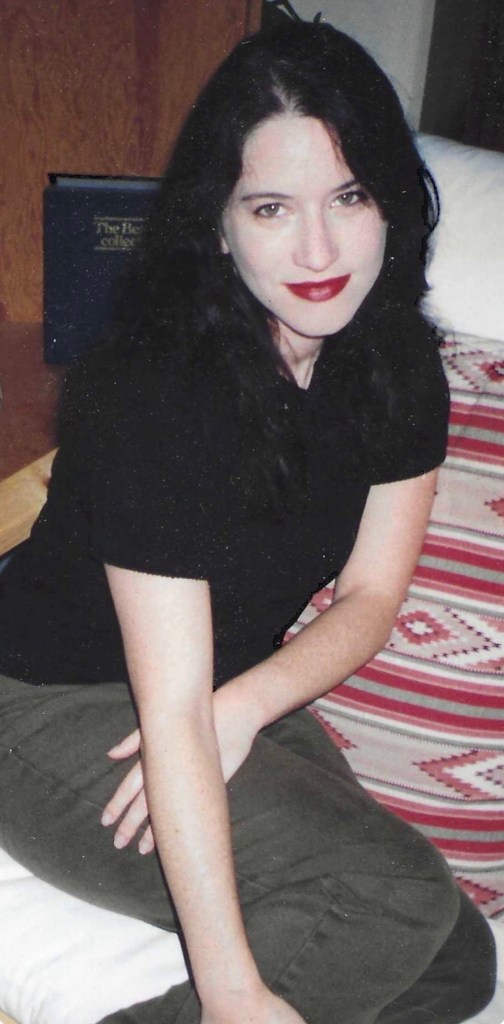
Mentally, she had shouldered an enormous load for over three years, and given that cancer diagnosis and chemotherapy back in 2012, even longer besides. So when she lapsed into “anxiety” after being sent home from the hospital at the end of February, no one on either her medical team nor in her personal life batted an eyelash. Of course you’re anxious, honey. Post- traumatic stress. The accumulation of everything you’ve gone through. She was given drugs to help with this, and they did very little. This is because her shortness of breath – from “anxiety” – ended up being the end result of the cancer doing its mysterious work in her lungs, messing up her passageways with a disease called bronchiectasis, and then the hammer blow of pneumonia on top of this that she was unable to survive. Not anxiety. It really hurts to know this.
Yet would you believe that six days before her death, she attended and participated in an online film studies discussion class that she loved? Or that five days before her death, she and I watched the White Lotus season three finale? Or, going back eight days before her death, I wheeled her around Golden Gate Park’s flower arboretum? I’m under no illusions that these were entirely comfortable things for her given what she was dealing with. They were not, and yet she still found joy or moments of peace in her final days.
I think I just can’t truly grapple with a death like hers, not merely because she was mine, but because she was just here, you know? It’s why the final months play on a loop in my brain, and frankly, I want them to. I want the intensity of this feeling. I don’t want it to flatten out when I think about her. I want to feel the injustice and the tragedy of it all, while also navigating my way through and eventually out of intense grieving.
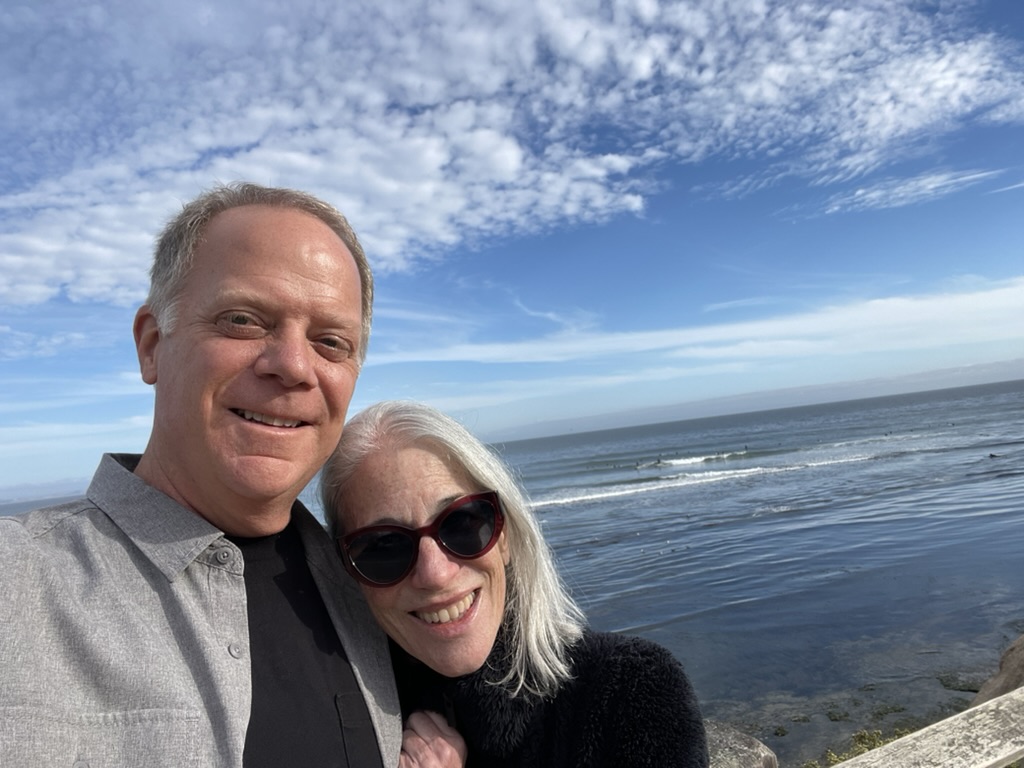
If you’re wondering, I’m mostly doing well. Seriously. I know that grief spills out in different ways, and mine just spilled out into this thing you’re reading. It’s a catharsis of a kind. I am in no way against therapy or support groups, nor do I find myself “above” them in any way. But weirdly, I find that typing words on pages is the single best way for me to grapple, the thing that helps me the most. I also know that grief is non-linear and moves in stages, and therefore I am open to whatever form it will take and whatever intervention, self-driven or otherwise, I’ll need. Perhaps her final months will flatten out into an overall composite picture of her, and of us together. Perhaps I won’t need that intensity of feeling any longer, and I can come to see her final two months merely as my least favorite out of the 370 months we spent together.
 The Word Goes Flesh